
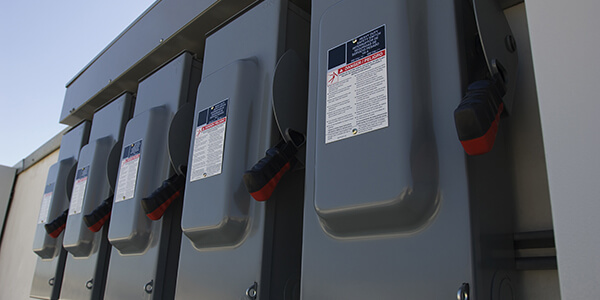
Electric motors run more of a property than most people realize: well pumps, sump pumps, garage door openers, and HVAC blowers in a home; three-phase motors, pumps, conveyors, and rooftop unit motors in a commercial or industrial facility. When a motor will not start, trips a breaker, or hums without turning, it needs a licensed electrician who understands both the wiring and the motor itself. Orth Electric wires, installs, troubleshoots, and repairs motors and motor circuits for homeowners, businesses, and industrial clients throughout Butler and Warren County, from a single-phase residential pump to a three-phase motor on a production floor.
We work across the full voltage range a motor job might involve: 480-volt three-phase power distribution and motor circuits in industrial settings, standard 240V/120V wiring for commercial and residential motors, and the low-voltage control circuits that start, stop, and protect them. That includes sizing and wiring motor starters and overload protection so a motor is not left vulnerable to a locked rotor or a phase loss. Robbie Orth's background includes hands-on work with generator sets and industrial machinery in the Navy and in a production and maintenance environment at AK Steel, so troubleshooting a motor that will not run is second nature.
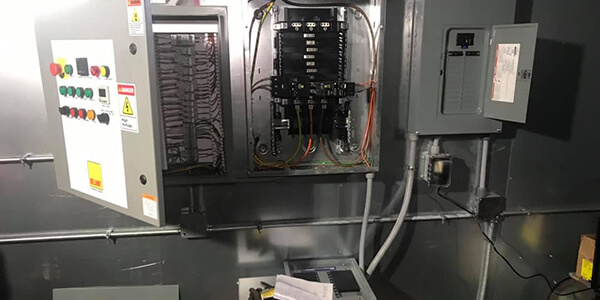
It can be either, which is why diagnosis matters before replacing parts. We check the circuit, the starter or capacitor, and the wiring first. If the motor itself has failed, we will tell you that too, but many "dead pump" calls turn out to be a tripped breaker, bad connection, or failed starter we can fix.
A motor starter switches power to a motor and typically includes overload protection that shuts the motor down before it overheats or burns out from an overcurrent condition. Larger motors, especially three-phase commercial and industrial motors, generally require a properly sized starter rather than a simple switch.
Yes. We wire and troubleshoot three-phase motor circuits for commercial and industrial clients regularly, including pumps, conveyors, and rooftop HVAC units, alongside standard single-phase residential motor work, all backed by a Master Electrician license and decades in the trade.
A motor that repeatedly trips a breaker is usually drawing too much current, either from a failing motor, a wiring fault, or an undersized circuit. We test the circuit and the motor to find the actual cause rather than just resetting the breaker.
Yes. We size and run dedicated circuits, disconnects, starters, and overload protection for new motors and equipment, whether that is one pump added to an existing building or a full motor circuit buildout for new machinery.
Call or text Orth Electric at (513) 267-6453 for a free estimate on motor wiring, installation, or repair.